 +919311449825
24x7 Receptionist
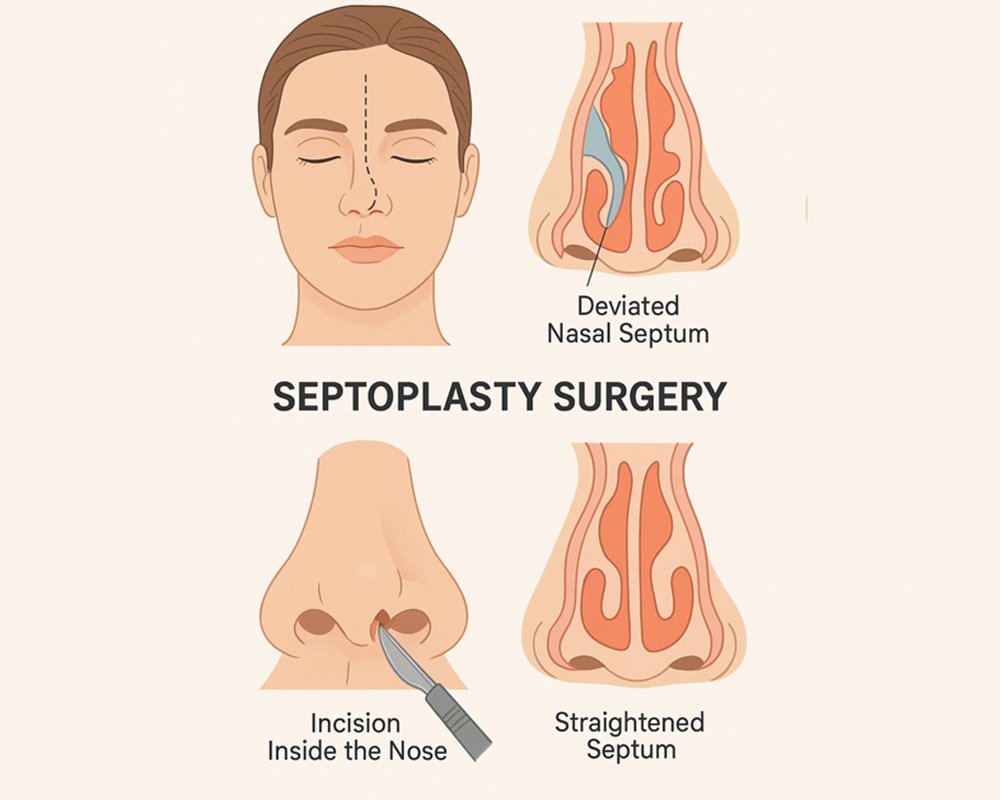
+919311449825Septoplasty is a nose blockage surgery performed to correct a deviated nasal septum—the thin wall inside the nose. When this wall bends to one side, it causes breathing problems, snoring, sinus issues, and constant nose congestion - nose feels blocked or stuffy, and air doesn’t pass easily. It happens when the inside of your nose becomes swollen or filled with mucus, making it hard to breathe normally. . Septoplasty gently straightens the septum to open your nasal airway and improve breathing. This surgery is performed by an ENT surgeon for septoplasty, specially trained to manage functional nasal surgery, nasal obstruction correction, and all kinds of nasal septum surgery.
Who Commonly Needs This Surgery?
People who experience the following may need septum deviation treatment ( Treating a bent or crooked wall inside your nose ) :
-
Difficulty breathing from one or both nostrils
-
Persistent nasal congestion
-
Snoring or sleep disturbance
-
Frequent sinus infections
-
Chronic mouth breathing
Types of Nose Surgery
At ORL International Hospital, we also offer:
-
Septoplasty
-
Rhinoplasty (nose reshaping)
-
Sinus surgery
-
Turbinate reduction surgery
-
Functional nasal surgery
How Nose Surgery Works
Nose surgery improves breathing by correcting structural issues such as blocked passage, deviated septum, enlarged turbinates, or sinus blockages. It restores normal airflow without affecting the shape of the nose (unless combined with cosmetic rhinoplasty).
Why It’s Done
-
To correct a blocked or deviated septum
-
To improve chronic breathing problems
-
To treat sinus drainage issues
-
To reduce snoring or sleep apnea symptoms
Symptoms You Require Nose Surgery
-
Breathing difficulty
-
Constant nasal blockage
-
Persistent sinus pain
-
Snoring
-
Mouth breathing
-
Chronic nasal congestion
Benefits & Risks of Having Nose Surgery
Benefits:
-
Improved airflow
-
Better sleep
-
Reduced sinus infections
-
Enhanced nasal function
-
Long-lasting relief
Risks:
-
Minor bleeding
-
Temporary discomfort
-
Infection (very rare)
-
Swelling
Why Septoplasty Surgery is Required
Septoplasty is required to repair the septum and improve airflow. It helps treat:
-
Deviated septum correction
-
Septal deviation repair
-
Chronic nasal blockage
-
Breathing difficulty while sleeping or exercising
-
Long-term nasal infections caused by poor airflow
Symptoms & Conditions That Need Septoplasty Surgery
You may need septoplasty if you experience:
-
Constant blocked nose
-
Nasal pressure, headaches
-
Post-nasal drip
-
Noisy breathing
-
Decreased airflow on one side
-
Sinusitis
-
Nosebleeds caused by dryness or septal deviation
Causes of a Deviated Septum Surgery
A deviated septum can happen due to:
-
Birth defect
-
Injury from accidents or sports
-
Repeated nose infections
-
Natural uneven growth of the nasal structures
Benefits of Septoplasty Surgery
-
Free and smooth nasal breathing
-
Reduced sinus infections
-
Better sleep quality
-
Improved airflow during exercise
-
Relief from chronic nasal congestion
-
Long-term solution (not temporary relief)
-
Enhanced airflow without changing the shape of the nose
How Septoplasty Surgery is Performed
-
It is done under local or general anesthesia
-
No external cuts — surgery is performed inside the nose
-
The ENT specialist straightens the bent cartilage and bone
-
Obstructions are removed to improve air passage
-
The nose is supported with soft silicone splints (if needed)
-
Same-day discharge in most cases
Types of Septoplasty Procedures
-
Traditional Septoplasty – Standard correction of the septum
-
Endoscopic Septoplasty – Performed using a small camera for precision
-
Revision Septoplasty – For patients who had previous surgery but still have issues
-
Functional Septoplasty – To improve both airflow and nasal function
Pre-Surgery Evaluation
Before surgery, your ENT specialist will:
-
Examine your nasal airway
-
Review your medical history
-
Recommend CT scan (if required)
-
Conduct allergy or breathing tests
-
Explain the surgical plan
Risks & Complications
Though safe, possible risks include:
-
Mild bleeding
-
Temporary swelling
-
Infection (rare)
-
Nasal dryness
-
Temporary numbness
-
Breathing changes during healing
Precautions After Septoplasty Surgery
-
Avoid blowing your nose for 1 week
-
Sleep with your head elevated
-
Avoid strenuous exercise for 10–14 days
-
Keep your nose protected from injury
-
Use prescribed saline sprays and medications
-
Attend follow-up visits for smooth recovery
Why Choose ORL International Hospital for Septoplasty
-
Highly experienced ENT septoplasty specialists
-
Advanced endoscopic system for precise correction
-
Best ENT hospital in Delhi with high success rates
-
Patient-centric care and quick recovery
-
Safe, painless, minimally invasive procedures
-
Modern OT setup & 24x7 medical support
Septoplasty surgery is a safe nasal surgery that corrects a deviated septum—the wall inside the nose that causes breathing problems. It is performed by expert ENT surgeons to treat blocked nose, sinus issues, snoring, and chronic congestion. The surgery straightens the septum, improves airflow, and offers long-term relief. With no external cuts and quick recovery, septoplasty is the best solution for breathing difficulty and nasal obstruction.
Fill Out The Form Details Given Below To Connect With Our ORL Hospital For General Enquiry, Sugggestions, Feedback And More...
Send Email On
drdhirendrasinghent@gmail.comOur Address
Plot No. 89, Pocket 1, Jasola Vihar, New Delhi, Delhi - 110025.Download Our Package
Fill This Enquiry Form


